Monday, November 29, 2010

Dangerous Design


We as humans, consume all types of food in beverage for numerous reasons. For health, for pleasure, or for perceived necessity. This means that there are plenty of opportunities for the design of food, as well as the ways in which we decide which to consume it. But sometimes the things we consume can hurt us. Alcohol can be found in almost every society, in which It can bring both pleasure and pain. It seems however, only in American society that we would combine our love of intoxication, with our love of staying awake in order to achieve more (sometimes achieving greater intoxication). This combination has arisen in the form of alcoholic energy drinks that pose several issues to our society. What was designed as a way to fulfill the desire to be intoxicated while also alert, has developed into an almost epidemic leaving people hospitalized and embarrassed. The physical label design of these drinks also posses a threat to young adults who have already grown accustomed to the energy drink lifestyle that has permeated out society over the last several years.
Drinks such as Sparks, Joose, and recently Four Loko, provide customers with a potent combination of alcohol and energy stimulant. The latest, Four Loko, packs a content equivalent to a six pack of beer, mixed with several cups of coffee, all in a twenty four ounce can. These drinks appeal primarily to young adults such as college students, due to their low cost and effectiveness. Young adults tend associate drinking alcohol with activities like going to parties, dancing, listening to music, and other activities that require energy. This desire leads them to these powerful drinks that pack a major punch in a small package. The package is also typically designed similar to the average energy drink, available in several inviting fruit flavors that make it appear relatively harmless.
However the drinks are far from that. The deceiving package design seems to neglect that potency and overall danger of consuming such drinks. The mixing of stimulants (caffeine) and depressants (alcohol) has been done in bars for ages in common drinks like jack or rum and coke. However the small amounts in these drinks are no where near the explosive power of these alcoholic energy drinks. The deceiving package, flavor, and overall concept seems to avoid communicating the very present danger of these drinks. Mixing alcohol and and caffeine in large amounts can lead the consumer to thinking they are lessening the effects of intoxication, when really they are only disguising it. If someone is to consume two cans of Four Loko, they are basically consuming 12 drinks, and several cups of coffee, in only 48 oz of fluid. This can lead to devastating effects when consumed quickly, as most of these beverages are. The masking effects of caffeine will lead people to consume more alcohol, unaware of the actual toll it will take on their body. This had lead to countless hospitalizations due to severe intoxication. Putting such a potent combination in such a convenient and harmless seeming delivery method allows for binge drinkers to quickly consume a potentially lethal amount alcohol in minutes.
Not only is the package designed, but the experience it's self. American culture seems to embrace the idea that a good time involves drinking heavily, while not showing the effects. People expect to got out and drink for hours while maintaining an upbeat and fun energy. These newer beverages appeal to solve this problem in an affordable, convenient package.Luckily, U.S. Administration is catching on to the dangers and the F.D.A. Has just proposed a ban on the Four Loko beverage. Even though it is not an elegant, artistic, or necessarily useful aspect of design, the concept of an alcoholic energy beverage is a design from it's concept and recipe, to the label and advertisement it uses. This design is one that hides it's true and deadly nature.

Utopian Design Saving New Life


There are countless objects we take for granted when living in a first world country. Most of us tend to not think about our abundance of clean water, relative ease in finding food, our ability to educate ourselves with books or the internet, and other everyday norms that seem to have been apart of our lives since as early as we can remember. Another thing we take for granted are certain types of basic medical technology that allows us to survive shortly after being born. Incubators are used in all children's and general hospitals in order to ensure the survival of preterm children. Although the technology isn't cheap, it is a standard in hospitals in the United States and other first world countries. However, some countries inhabitants do not have access to such technology, and therefore face many risks when their children are born preterm. In countries that have limited health care, they may have Neonatal incubators that have been donated at one point in time, but eventually broke down and had no one with the replacement parts or expertise to fix them. This creates a problem that does not help alleviate the number of 1.8 million preterm babies that die each year from simply a lack of warmth and protection until they grow strong enough body fat and the metabolic state to stay warm.
(Image from nytimes.com)
As with every problem, there is someone (likely a designer of some kind) working to solve it. In this case, that someone is Design That Matters. The company has created the NeoNurture Car Parts Incubator. This incubator is designed specifically for regions of the world that have limited access to the resources necessary to fix complex medical equipment. How do they do this? By building it with parts of something that at least one person in almost in any region of the world can fix: a car. The NeoNurture implements a simple design that utilizes car headlights, horns, fans, batteries, and signal lights to create a simple and affordable incubator that can save lives. Headlights are used to create heat, fans are used to circulate and filter air, turn signals and door chime sounds are used to alert a nurse of vital signs, and car or motorcycle batteries are used to protect the device in movement or a power outage. With all of these simple parts, you may think that the design looks more like a steel shell rather than a piece of medical equipment, right?
Well the other aspect of the NeoNatal Incubator is that it looks, and feels good. The company wished to create an incubator that not only worked, but would also be comfortable for any baby no matter what region in the world they are from. The look of the incubator is much more pleasant than that of  standard pieces of medical technology. It shares the same clean aesthetic as most medical technology, yet it's also pleasant to look at. The designers also considered something that is lacking on most incubators designed today: mobility. The NeoNatal has two large bicycle type wheels that facilitate movement when in regions that may not have flawlessly smooth hospital floors.
(Image from nytimes.com)
The NeoNatal was a collaboration between Design that Matters, students and teacher's at MIT, Rhode Island School of Design, The University of Arizona, Stanford University, and recieved input from the well known IDEO firm. This collaboration has worked together to engineer something that is a true example of utopian design. An affordable, functional version of a normally expensive and complex medical device is something that is desired world wide. This team of designers has risen to the challenge of creating something that will save lives. Who knows? Maybe someday, one of those lives will  return the favor.

Monday, November 15, 2010

Ergonomics... In music?

(Image from RickToone.com)


Ergonomics seeks to alleviate the stress and discomforts associated with numerous everyday objects. The field has worked on tools, chairs, desks, computerware, clothing, and various other applications. One that is less recognized, (and of less concern to most) is ergonomic guitars. Anyone who has ever played a Fender telecaster, or most acoustic guitars knows that not all guitar designs are created ergonomically equal. Most popular designs that do incorporate some ergonomic values, such as fender's stratocaster with an angled body, don't solve all of the position problems associated with guitars. Some luthiers, such as Rick Toone of New Jersey, have taken it upon themselves to create a guitar that is comfortable in more ways than one.

Toone's “Dove” ergonomic baritone guitar is a combination of total functionality, with natural beauty. The materials include swamp ash and maple woods, stainless steel, bronze, and aircraft grade aluminum. I think of the look as a cross between a medieval weapon and a space-age instrument. The natural wood contrasting with the stainless steel and bronze instantly catches the eye. Not to mention the completely original body design.

(Image from RickToone.com)

The body attempts to solve all of the ergonomic issues of most electric guitars. It has a contoured body with a “Hip hole” that forms to the body for the optimal natural playing position. The wave shape of the bottom and end of the guitar serve a contours for the knee and leg, when using the guitar in a sitting position. This gives the player multiple options for placement, allowing them to find the most
comfortable position for rocking out. Also, the fretboard is a fanned design, which allows for the strings to reach their optimal length for an accurate pitch when accessing the higher regions of the neck.

(Image from RickToone.com)

This is hands down the most interesting-while-still-appealing guitar design I have ever seen. It has both function and originality. I don't see it as becoming a top selling item (mainly since it is one of a kind), but I definitely believe many axe-men/ women are trying to get their hands on one of these ergonomically correct tools for their musical woodshed.

Ergonomics in Computer Mice


As we sit clicking and typing away at our computers, we often neglect the idea that we could be harming our body. The keystrokes seem intuitive, while holding the mouse or using the pad feel like second nature. If we take a minute to take our hands of the computer and mouse and rest them naturally in front of us on a table or desk, something quickly becomes apparent: our palms are not flat on the surface. It is most comfortable and natural for our palms to rest us at a slight angle with the thumbs balancing the hand. In this manner, why would our computer products be designed so flat and flush? Most likely it is due to the aesthetic appeal of electronics that are thin and concise. But after hours of clicking away at home, I think most of us would trade in some of the looks for something not only comfortable, but better for our bodies. Ergonomic design seeks to find the balance between aesthetics and proper physical comfort. One example of this is the “wow-pen ergonomic mouse” made by the South Korean company Wow Technologies, Inc.
(Image from Impactlab.net)

The “wow pen” is known as a vertical mouse, for it's angled face and almost pen like grip. The shape is designed to be not only more natural feeling, but actually better for our arms, wrists, and hands. The angled shape helps to recreate our natural hand posture, alleviating tension and helping to reduce the chance of carpel tunnel syndrome. With the amount of time we spend on computers, more people should take this measure of long term safety into account.
When the hand is in a more natural position, it is comfortable. While some computer mice require us to keep pressure off to avoid unwanted selections (such as one-click mice), the vertical mouse can bear the weight of the hand in a natural position, relieving tension. If you are someone that would use a mouse for several hours at a time (such as a Designer) comfort should be quite important in your equipment selection. Not only is the vertical shape more comfortable, but also more relative to the way we control a pencil or pen. Having a mouse that simulates this shape allows for greater accuracy when creating computer illustrations. When a tablet is not accessible, this mouse could greatly improve a designers ability to simulate actual drawing. Ideally, this mouse would suit people in professions involving CAD design, and design programs such as Adobe Illustrator and Photoshop. The mouse also has standard right and left click buttons, a scroll wheel, and two forward and back buttons at the side of the thumb, allowing for easy access to functions within software.
Although there are numerous physical benefits of this moue, it doesn't quite hold the same aesthetic value as other mice on the market. The odd shape of the mouse seems to have posed some issues with creating visual balance in the design. Most of the mouse is covered by a plastic/rubber piece to provide grip, while contrasting with a gloss/metallic painted body displaying a logo in white text. The look is somewhat awkward and imbalanced. The colors of metallic silver, metallic pink, and metallic black don't leave many options for customization by the user. Also, the fact that it is a wired mouse takes away from any means of simplicity. There's nothing simple looking about tangled cords. If some of these aspects were addressed, I believe the “wow pen” would be a much more popular product.
Aside from it's few visual aesthetic flaws, the comfort and usability of this mouse seem to be enough to justify buying it at it's respectable price range of twenty to thirty dollars. If Wow Technologies addressed the aspects of color, and making the mouse wireless (bluetooth maybe?), I'm sure customers would be willing to pay extra for a better look that includes greater simplicity. In all, the design is very interesting and unique for an ergonomic computer mouse. I have to admit I am going to pick one up the next time I have some available funds for such a device.
(Image from alieexpress.com)


Monday, November 8, 2010

Typography Art


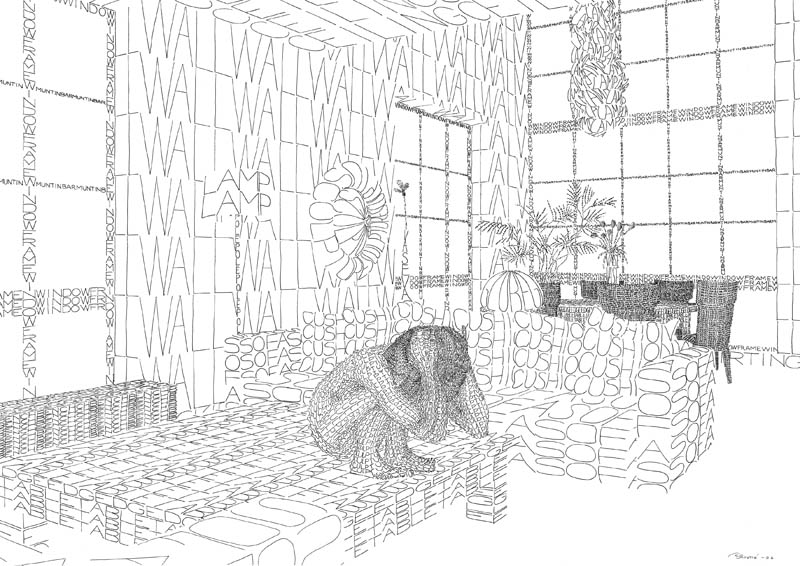
("Loft" from thomasbroome.se)


Typically words are accented by images to communicate some sort of information. People usually separate the two eve when they are together in some form of design. What about when you literally create an image out of words? This can be seen in typography and ASCII art. These methods involve the production of images using nothing but text characters and the manipulation of color.


(From http://ursispaltenstein.ch/blog/images/uploads_img/ascii_2.jpg)
There are many different types of this art. One form is ASCII art. ASCII (ask-ee) is the American Standard Code for Information Interchange and represents 128 characters that are used to represent text in computers and other communication equipment. Only 94 of these characters are actually printable and can be used to create combinations of letters, numbers, words, and sentences. The art consists of only the characters being used and spaced appropriately to give an image it's detail.

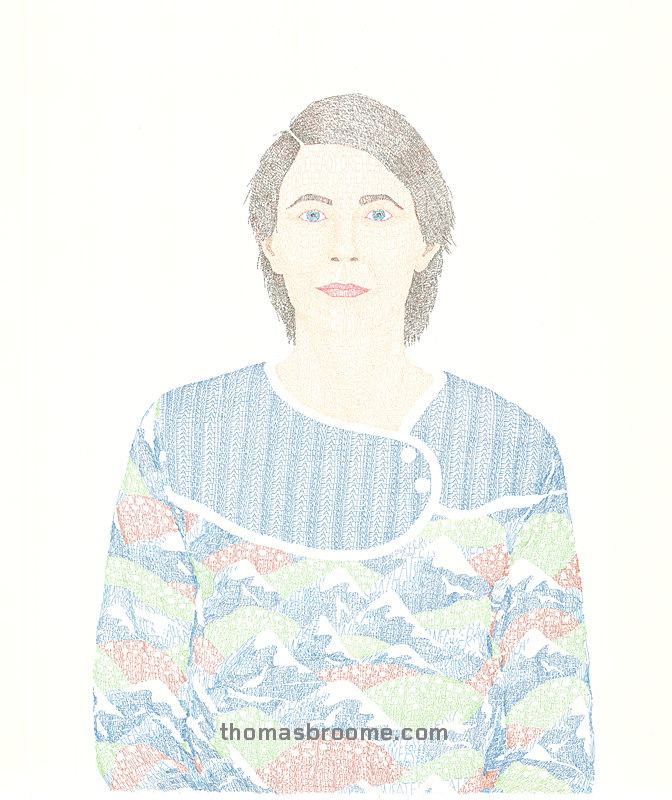
Besides the ASCII art, there is other text art that uses full words and sentences as well as the incorporation of color. These can be seen in the work of Swedish artist Thomas Broomé. Broomé does his work by hand, creating images that are completely composed of the words of the graphic content itself. Piece's like “It's Only Words (Lana)” depict lifelike images by simply using color and the names of features in the image.This type of art truly takes words and images to the utmost literal sense, leaving the artist and the audience with a clever and appealing visual experience.

("It's Only Words" Thomas Broome)
Typography art is not always conveying a message, as seen with ASCII. It also may appear to be more for an awe effect of the amount of time the work must have required. However both are interesting ways of combining text and image into one coherent and appealing image.

Brian Feis: Words and Images in Comics


(Image from Planetmarkus.com)

Words and Images seem like different forms of communication, when in fact the most successful communication combines both of these aspects. This type of communication is used in everything from advertisement and signage, to the wonderful world of comic books. On Tuesday November 2nd, design one had the privilege of hearing graphic novelist Brian Fies talk about his creative process, as well as underlying principles of comic book design. Throughout the lecture, Fies referenced interaction between words and images by showing examples from his book; “Mom's Cancer” .
“Mom's Cancer” depicts the family ordeal Fies's mother's battle with incurable lung cancer. The material began as a web comic and a way for Fies to cope with the situation, but soon ballooned to such popularity that Fies received an offer to publish the comic as a full book. Throughout the book Fies uses words and images to explain the experience of his mother undergoing cancer treatment, and the experience dealing with the traumatic situation. Fies stated that his process starts with words. Not only does he develop the script, but also decides on the location of the words to guide the position of the images. He then illustrates the the script he has created. By creating the words first, Feis can create images that solidify his message and bring better understanding to the reader. The images work to enhance the story already being told by the words.
(From http://markc1.typepad.com/photos/uncategorized/cancer_comic.jpg)
One of the most interesting aspects of Fies's book, as well as the comic medium in general, is the ability of different types of images to convey different levels of reality and emotion. This relates back to the idea of gestalt psychology in comics, and as Fies said “Distilling something to it's essence”. Feis could have designed each character (especially his mother) with great detail, implying a greater sense of reality, but instead chose a simpler character design that allows the viewer to see the characters as more universal. This allows readers to place themselves in the situation, allowing them to deal with a similar situation as to what Feis and his family dealt with. While the words remain the same, the choice of images to depict those words  can greatly alter the mood and overall effect of a comic.


Monday, November 1, 2010

Innovations in Electric Guitar Design

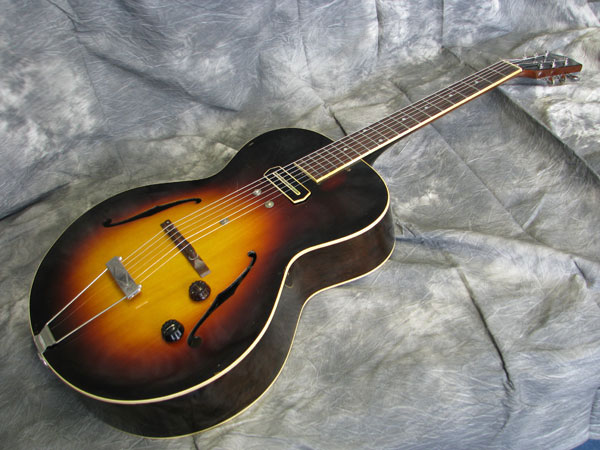
(Image from creamcitymusic.com)

The first electric guitars were little more than acoustic guitars outfitted with a pickup to create and amplified signal in order to hear the guitar player in a jazz big band. Over the years, through countless design innovations, the electric guitar has transformed into shapes and forms to serve every purpose. The main impacts of electric guitar design innovation have been increased comfort, increased musical range, and more overall sonic possibilities.
(Image from Fender-Stratocaster.com)
The shape of a standard acoustic guitar usually consists of a rounded body that closes off at both sides of the guitar neck. The body is hollow to allow the sound to to be amplified. With the advent of guitar pickups, which transmit the vibrations of metal strings into an electric signal, the shape of the guitar could take on any form. This has allowed for thinner, more ergonomic bodies, such as that of the fender stratocaster. With these more natural and comfortable shapes, guitarists can further relax in their playing, which is a necessity for developing proper and consistent technique. This change in shape also allows for comfort a guitar player may need to stand for a long period of time.

(Image from Wutzdog-Guitars.de)
Along with the ability to achieve ergonomic shapes, the ability to change the traditional body style created designs that promote access to the entire guitar fretboard. This allows players to easily utilize the entire range of the instrument, therefore being able to play more notes, as well as more variations of the same note or chord. In this sense, players could discover new ways of playing the guitar.Although the concept of the cutaway guitar did not originate with the electric, the ability to easily manipulate the body without changing sound made it more prevalent.


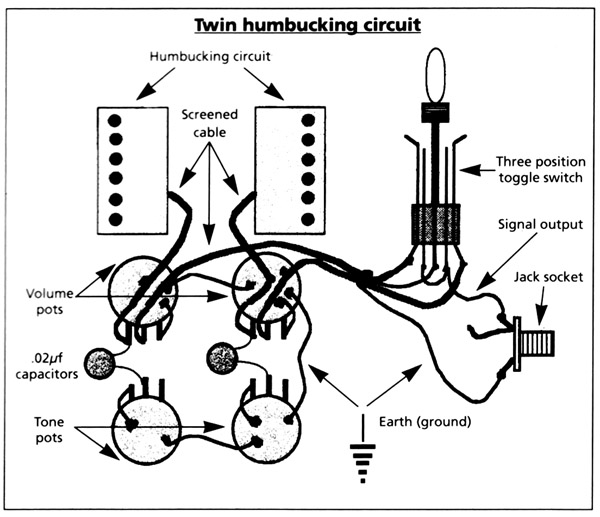
(Humbucking Pickups- Image from dacetech.com)
With the advent of the electronic pickup came a new way to  alter the way a stringed instrument sounds. Electronics in guitars allow for the alteration of equalization of the signal, as well as the entire signal itself. For example, the standard Gibson guitar design consists of two Humbucking pickups each with their own volume and tone knob, and a switch to use either one of or both pickups at the same time. These options instantly create thousands of sound opportunities compared with a standard acoustic guitar. Couple those possibilities with an amplifier that has it's own tone equalizer and volume adjustments, and you have thousands of more possibilities. With the addition of guitar effects, these possibilities have allowed individual guitarists such as Jimi Hendrix, Jimmy page, David Gilmore, and countless others to develop a distinctive sound that can be instantly recognized.


(Image from thegearpage.net)

These changes in guitar design may appear to be somewhat small, but their impact has played a large role in shaping the music we have been hearing for over seventy years. If the deign of the guitar form and content had not changed, the music we know would not exist. Due to the change in the guitar's shape and output, we have increased it's comfort, increased it's range, and created sound possibilities that will continue to be explored for generations.